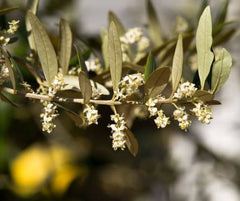
The olive tree blossoming is a unique and special moment in the life of this tree, so representative of our land. At Ad-Morum, we appreciate these beautiful moments while also celebrating it as part of the production process of our beloved Extra Virgin Olive Oil.
The flowering of the olive tree: a natural spectacle
Jun 14, 2023

The olive tree bloom is a unique and special moment in the life of this tree, so representative of our land. At Ad-Morum, we appreciate these beautiful moments while also celebrating them as part of the production process of our beloved Extra Virgin Olive Oil.
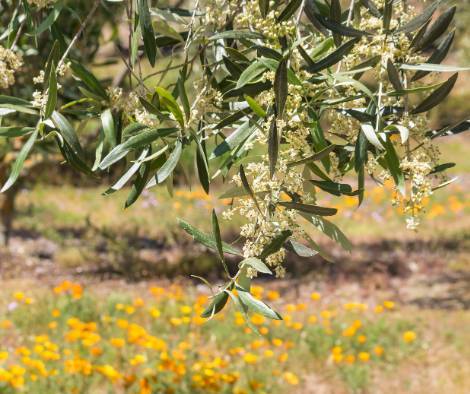
Stages of flowering
Floral bud
As spring approaches, floral buds begin to form on the branches of the olive tree.Opening of flowers
The olive tree blooms when the average daily temperature exceeds 18 °C. Depending on climatic conditions and the growing area, the flowering season of the olive tree may occur earlier or later. The flowers are located on the shoots of the previous year, as the buds need to go through a period of vegetative rest to be productive (average temperatures below 10 °C).
The olive tree, like other crops, has self-fertile varieties and self-sterile varieties. Self-fertile olive varieties have a better ability to set fruit and are self-sufficient. Under unfavorable conditions, cross-pollination between different olive varieties promotes a higher fruit set compared to monovarietal crops. Some of the well-known self-fertile olive varieties include Arbequina, Hojiblanca, and Picual, among others.
Pollination and fertilization
At this stage, pollinating insects, such as bees, visit the flowers in search of nectar. Thus, pollen is transferred from one flower to another, allowing for fertilization and the formation of fruits. After pollination, the ovary of the fertilized flower develops and becomes the olive fruit. It may happen that, after fertilization, some flowers fall naturally due to self-elimination processes or lack of successful pollination. However, it is necessary to control that there is not an excessive fall of flowers. This is an indicator of unfavorable conditions during flowering.
Fruit formation
Fertilized flowers develop into small fruits known as olives or drupes. Initially, they are green, and as they ripen, they change color to dark purple or black tones, depending on the variety. Therefore, the ripeness of the fruit will depend on the type of olive oil desired to be produced.
Influences on olive tree flowering
The weather
Excessively high temperatures during flowering reduce the fertility of olive pollen. This negatively affects the setting of olives. If intense and constant rains occur during the olive tree's flowering, the pollen is washed away, which will lead to a reduction in the harvest.
Wind also plays an important role, as long as it is gentle and constant, it can carry pollen from one flower to another. However, strong wind can excessively disperse pollen. Thus, cool and humid air will be what favors the transfer of pollen from one olive tree to another. By maintaining its fertilizing capacity for a longer time, it promotes a greater load on the olive trees. Another factor that favors olive fruit set is the presence of water reserves.
Pests
Some of the most harmful pests for the olive tree are: Prays oleae Bernard (olive moths), Bactrocera oleae Rossi (olive fly) and Saissetia oleae Oliven (olive scale). The possible invasion of any of these insects can harm both its leaves and its flowers and fruits. Its impact can vary depending on the abundance of olive tree flowering and the expected harvest at that time.
Especially, Prays oleae Bernard, known as the olive moth, shares a synchronization of its biological cycle with the olive tree itself. It comprises three annual generations:
- The phyllophagous, feeding on leaves and buds.
- The anthophagous, a period in which the larvae feed on the olive flowers.
- The carpophagous, a period where its food comes from the olive seed or almond.
As seen, this type of pest is one of the most relevant and damaging to the olive tree. Primarily, the carpophagous generation is the most harmful to the olive harvest.
A healthy olive tree will allow the olives to set with abundant flowering. Olive tree care (fertilization, pruning, pest and disease control, irrigation, etc.) is crucial for obtaining abundant harvests.